
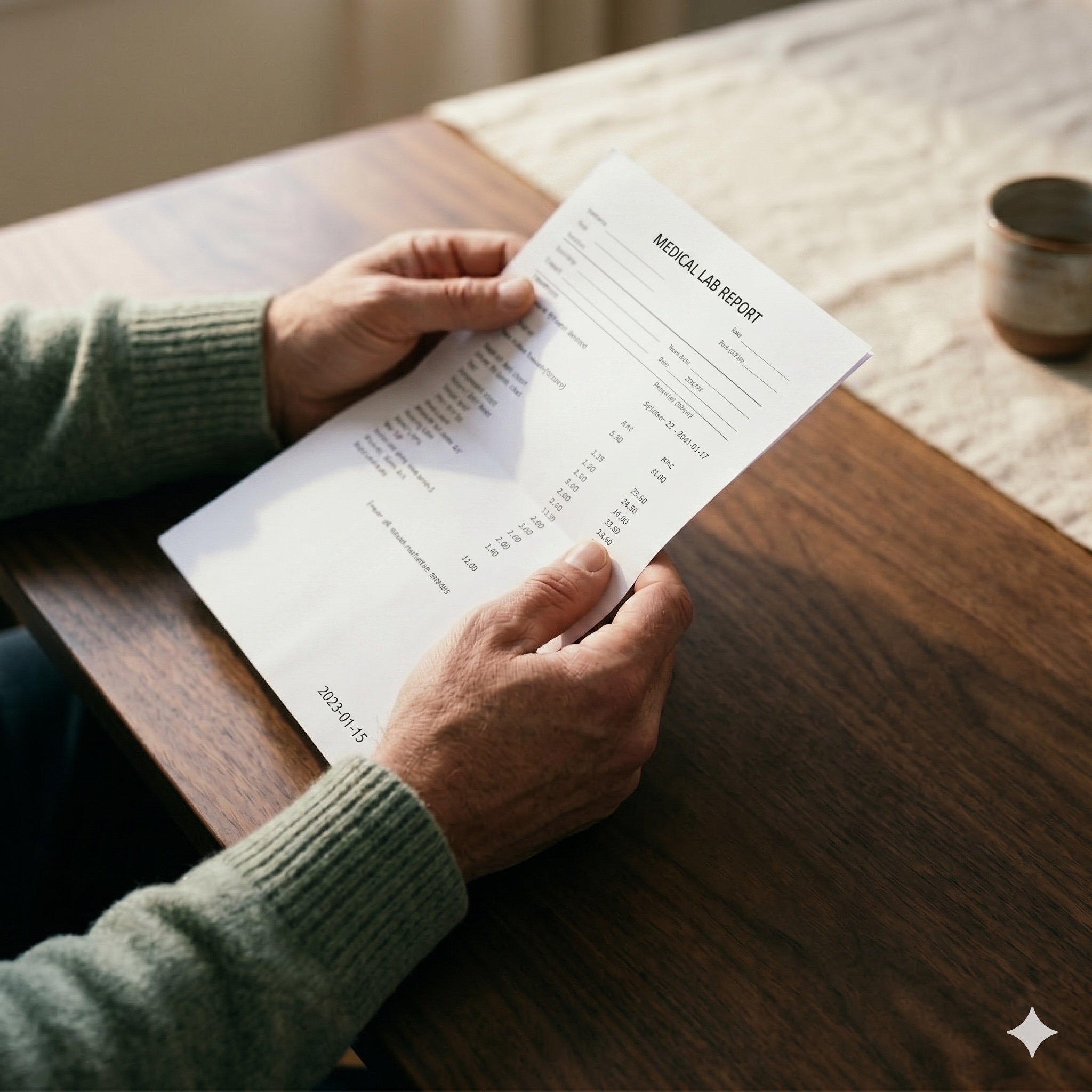
A personal health record (PHR) app is software that lets an individual, rather than a hospital or clinic, collect and manage their own health information in one place: lab results, imaging, prescriptions, clinical notes, and visit history, aggregated from any provider the person has seen. Unlike a hospital's electronic health record (EHR), which the institution owns and controls, a PHR is controlled by the patient. Octo Health is one example of this category: a HealthTech app giving patients a unified, secure, patient-owned vault for their entire medical history.
PHR apps vs. hospital and insurer portals
The core distinction is ownership. A hospital portal, lab app, or insurer login is a window into records that institution created and controls. It usually only shows what that one provider has on file, and access ends the moment you switch providers or plans.
A PHR app instead belongs to the patient. It pulls together records from multiple providers into a single account that the patient owns, controls, and keeps regardless of which doctor, hospital, or insurer they use next. This distinction matters in practice: 59% of US individuals had multiple separate patient portals or online medical records in 2024, but only 7% used any app to combine them into one place (ASTP/ONC, 2024). Most people are already living with fragmented records; PHR apps are the tool built to solve that specific problem.
What a PHR app typically does, and how Octo Health fits the category
Aggregates records from any provider. A PHR app should let you add lab results, imaging, prescriptions, clinical notes, PDFs, and even photos of paper documents, regardless of which doctor or hospital created them. Octo Health works this way.
Organizes history over time. Rather than a flat file dump, a well-built PHR presents your history in a usable order. Octo Health's Health Timeline displays every record chronologically, so you can see your health history as a continuous story rather than disconnected documents.
Surfaces patterns, without diagnosing. Some PHR apps generate insights from the data you've aggregated. Octo Health's Health Score is a data-driven summary that highlights patterns in your records; it is explicitly not a diagnosis and doesn't replace a doctor's judgment.
Lets you share selectively. A PHR app should make it easy to hand your history to a new doctor without re-requesting records from every old provider. Octo Health's secure sharing lets you send your full history to any physician via a time-limited link; the doctor doesn't need an account.
Protects the data it holds. Because a PHR aggregates sensitive information in one place, security matters more, not less. Octo Health uses AES-256 encryption at rest and in transit, is HIPAA compliant, and is built with GDPR standards.
Frequently Asked Questions
What's the difference between a PHR and an EHR?
An EHR (electronic health record) is owned and maintained by a healthcare provider and typically only covers care delivered by that provider. A PHR (personal health record) is owned and maintained by the patient and can combine records from every provider they've seen.
Do I need technical skill to use a PHR app?
No. Most PHR apps, including Octo Health, are built for everyday consumers: you upload or add documents, and the app organizes them, rather than requiring any technical setup.
Can a PHR app replace my doctor's records?
No. A PHR complements clinical records rather than replacing them. It gives you your own copy and view of your history, which you can then share with any provider.
Is Octo Health the only PHR app available?
No. PHR apps are a broader software category. Octo Health is one example built specifically around patient ownership, a chronological timeline, and a strict no-data-sale policy.
Do PHR apps generate medical diagnoses?
Legitimate PHR apps don't diagnose. Octo Health's Health Score, for example, is a pattern-based insight generated from your own data, explicitly not a diagnosis, and it doesn't replace professional medical evaluation.
Why do so few people use a PHR app despite fragmented records?
Awareness and habit are the main gaps. In 2024, 59% of US individuals had multiple separate patient portals or online records, but only 7% used an app to combine them (ASTP/ONC, 2024), largely because most people don't know a dedicated PHR category exists.
Curious what a unified, patient-owned health record actually looks like? Become a member.
